Conversational AI Agent for Service Businesses: How to Recover the Leads Your Website Is Losing
Your service business website loses leads every day to slow responses and ignored forms. See how a conversational AI agent recovers them — without giving up human control.

Every day your website gets visits after hours, or inquiries nobody answers in time, you're losing business you already paid to generate. A conversational AI agent responds instantly, qualifies the visitor, and hands them off to your team when it matters — without pretending it can replace human judgment in every case.
If your service business depends on someone filling out a form, or waiting until you open tomorrow to get an answer, you're probably losing more leads than you realize — not because of a traffic problem, but a speed problem.
The Problem Isn't Your Website Traffic — It's Your Response Speed
Most service business owners track their traffic numbers, their ad spend, and their Google rankings — but rarely calculate what it costs them every hour an inquiry sits unanswered. The expectation of an instant response from someone shopping for a service isn't a courtesy anymore — it's the filter people use to decide whether they stick with you or move on to the next result in Google.
Picture the visitor's actual journey: they land on your site looking for a quote, fill out a form or type into your chat, and wait. If nobody responds in the next few minutes — not hours, minutes — they're probably already messaging the next provider on their list. That inquiry doesn't vanish from your analytics dashboard; it just stops turning into a call, an appointment, or a signed contract.
Run your own numbers: multiply your website's monthly inquiry volume by the share you suspect goes unanswered in the first few minutes, then multiply that by your average customer value.
Why a Form or Live Chat Alone Won't Fix This
The problem isn't the absence of a contact channel — most service businesses already have a form, a phone number, and maybe live chat. The problem is that none of the three work after hours without someone physically available:
The form is passive: the visitor hands over their info and waits, with no idea when a reply is coming or whether their inquiry was even a fit.
Live chat depends on someone being logged in at that exact moment — outside business hours, it's just a form wearing a conversation's clothing.
The phone is still the most trusted channel, but also the most expensive to staff around the clock with real people.
A conversational AI agent doesn't replace any of these channels — it fills the exact gap all three leave open: the moment a visitor has a question and nobody on your team can answer it yet.
What a Conversational AI Agent for Service Businesses Actually Is
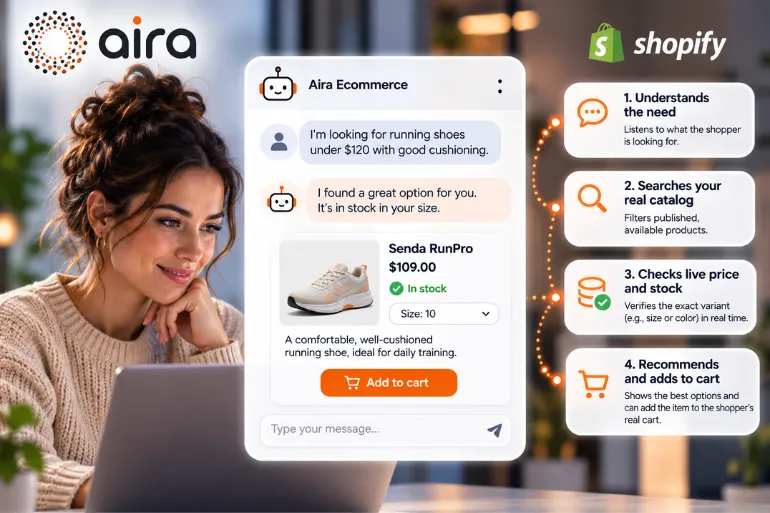
A conversational AI agent is a system that chats with your website visitors in real time, using your business's real information — your services, pricing, coverage area, availability — to answer sales questions, capture the visitor's contact details, and decide whether the inquiry needs to go straight to your human team.
Unlike a rule-based chatbot (the classic "press 1 for..." decision tree) or a generic AI with no knowledge of your business, a well-built conversational AI agent is trained specifically on your service catalog and how you actually work — so it isn't improvising answers you can't honor later.
How It Recovers Leads, Step by Step
The mechanism is simpler than the term "artificial intelligence" suggests, and it's worth understanding before you evaluate any provider:
It responds instantly, day or night, with no gap the visitor can feel between their question and an answer.
It asks the qualifying questions your team would ask on a first call — what service they need, in what area, how urgent — so the lead that lands in your inbox already comes with context, not just a name and an email.
It captures contact details at the visitor's peak moment of interest, before they close the tab.
It hands the conversation to a person on your team when the inquiry calls for it — which is exactly the part most providers don't explain clearly (next section).
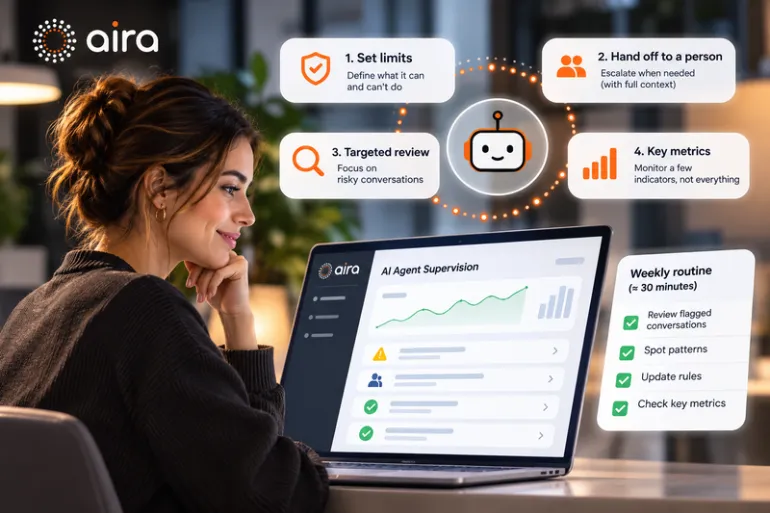
When (and How) a Human Should Step In — the Part Almost Nobody Explains Well
This is probably the strongest silent objection any service business owner has before signing up for something like this: what happens if the AI answers wrong, or a customer has an urgent need the system doesn't catch?
It's a fair objection, and the right answer isn't "it never gets it wrong" — no serious tool should promise you that. The right answer is that the system has clear rules for when a conversation stops being a fit for AI and gets routed to a human: a request outside your service catalog, a complaint, an operational emergency, or simply the visitor asking to speak to a person. A well-configured conversational AI agent doesn't try to "handle everything" — it knows exactly where its role ends and yours begins.
In practice, that's the difference between a tool you can trust to automate part of your sales response, and one that creates more oversight work than you had before.
Why It Matters That the AI Answers With Your Real Data, Not Generic Fluff
One of the risks that gets the least attention in content about business AI chatbots is the made-up answer: a system that, lacking real information about your business, "fills in" a plausible-sounding response that doesn't match what you actually offer, your real availability, or your real pricing. For a service business, where trust is built from the first contact, that can cost you more than not answering at all.
So when evaluating any conversational AI agent for your website, the question isn't just "how well does it converse?" but "what information does it answer with, and what happens when it doesn't have it?" A well-built system recognizes its limits and hands off instead of improvising — Aira Web, for example, is designed to always answer from your business's real information, and to route conversations to your human team when an inquiry falls outside that, instead of inventing an answer nobody can later back up.
What It Costs, and What ROI You Should Actually Expect
The cost of a conversational AI agent varies by provider and implementation level, but the question that matters isn't just "how much does it cost" — it's "how much does it cost me not to have it": every inquiry that goes unanswered in time is a sale you already paid to generate (through traffic, campaigns, rankings) that's lost in the very last stretch.
As a market reference, a managed install of a conversational AI agent like Aira Web runs around $1,499 for setup (including the first month), then $385/month after that — a flat, predictable rate instead of a per-conversation pricing model that can get unpredictable fast as your volume grows.
There's no universal "guaranteed ROI in 30 days" figure — any provider who promises you one without knowing your real traffic volume and sales cycle is selling you an expectation, not a fact.
Common Objections From Service Business Owners
"Will I actually get more customers, or just more conversations?" More conversations only matter if they're qualified. The difference isn't how many conversations the agent generates — it's how many land in your inbox with the context your team needs to close.
"Is it worth it compared to just hiring someone?" It doesn't compete with your team — it competes with the hours your team isn't available. The fair comparison isn't "AI vs. a person," it's "AI after hours vs. nothing after hours."
"What if it says something it shouldn't?" That's exactly why the human-handoff section above isn't a technical detail — it's the direct answer to this objection. A well-configured system knows when to stay quiet and pass the conversation along, not just when to talk.
Before You Decide
Losing leads to delayed responses isn't a traffic problem or an ad budget problem — it's a speed-and-judgment problem: responding fast, but with real information and a clear protocol for when to hand the conversation to a person. That combination, ultimately, is what separates a conversational AI agent that builds trust from one that just creates more oversight work.
Written by the Aira content team, specialists in conversational AI agents for service businesses and ecommerce.
Frequently asked questions
Does a conversational AI agent replace my customer service team?
No. It's built to cover the gap your team can't staff 24 hours a day — after-hours inquiries, instant first response, initial qualification — and hand off the conversations that genuinely need your human team.
How long does it take to set up on my website?
It depends on the provider and whether it's a self-serve setup or a managed one. A managed install, like Aira Web's, is built specifically so you don't have to configure it yourself.
Does it work the same way for any type of service?
The mechanism (respond, qualify, hand off) stays the same, but the qualifying questions and tone need to match your service type and sales cycle — qualifying an urgent repair inquiry isn't the same as qualifying a project that takes weeks to decide on.
What happens if the AI doesn't know how to answer something?
It should recognize that and hand the conversation to your team, instead of making up an answer. That's actually the question you should be asking any provider before you sign up.
Do I need my entire service catalog digitized before I start?
It helps, but it's not a requirement to get started — a managed install works from whatever information you already have (your website, documents, internal FAQs) and gets refined as it goes.